
Registration
Newspapers, Technology, and a Shared Western Identity. Overcoming the problem of geolocating of “The West"
Date
November 13, 202611:00 AM – 1:00 PM
Event location
Digital Society Initiative (DSI), University of ZurichEventraum
11:00 - 14:00
Organizer
DSI Digital Humanities Community in collaboration with Elena Fernández Fernándezdigital-humanities.at@domain.dsi.uzh.ch
Description
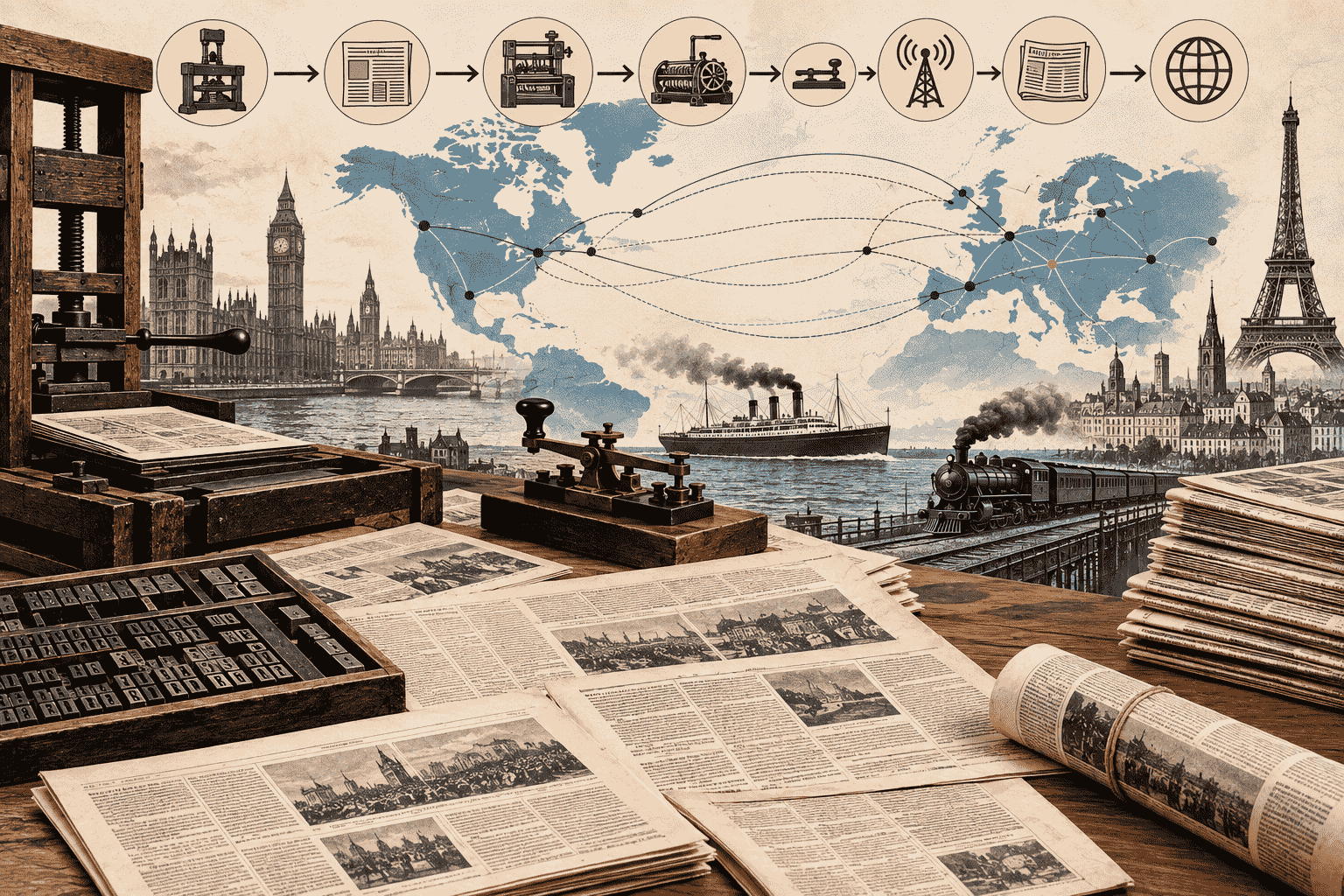
About the talk: Is it possible to think of Technology as responsible for processes of Globalization in Western Societies, and as a trigger of cultural homogenization? Yes, it is. While trying to geolocate concepts like culture, national identity, or ideological constructions like “The West” is difficult, research shows that discourses related to technology seem to act as a unifying force of shared identity in Western societies. The EU-funded research project GLOTECH (Time, Technology, and Globalization. A study of the role of technology in processes of modernization and globalization using the Press, Big Data, and Computational Research Methodologiesi), that took place between 2021-2023, and that was developed at the University of Zurich and at the University of Copenhagen/DTU with Elena Fernández Fernández, as Principal Investigator, explored the role of technology in processes of modernization and globalization using the press, big data and computational methods. The analysis focused on the press in Spain, France, Germany, Switzerland, Italy, UK, Ireland, and The United States, over an observational time of approximately 200 years (1830-2018). Eight newspapers of record located in world capitals and one suburban newspaper were selected. GLOTECH was formed by two research blocks. Research block one aimed to analyze the Theory of Social Acceleration. Research block two focused on exploring Western Discourses about Science and Technology. Data outputs in block one unexpectedly showcased remarkably similar editorial practices in the eight newspapers of record and very distinct information behavior in the suburban news outlet. The Theory of the World City, that proposes the idea that world capitals could be considered as an independent ecosystem of their own increasingly detached from their respective national territories, supports these findings. Extensively analyzed in fields such as economics (Castells), geography (Sassen), or innovation (Rozenblat et al.), GLOTECH adds newspapers of record, located at world capitals, as one more element to consider in the world city ecosystem. Nevertheless, research findings in block two tell a different story. Block one, initially aimed at analyzing the Theory of Social Acceleration, indirectly analyzed the form of newspapers (rhetorics, news sections), leaving aside article content. Research block two focuses on analyzing key terms related to science and technology in newspapers over the whole observational time, and therefore, focusing on discourses. Results show a non-trivial trend of information homogeneity in all newspapers (both newspapers of record and the suburban newspaper), consequently revealing the agency of technology as a trigger of globalization and as a booster of cultural homogenization. GLOTECH’s main research contribution, consequently, consists in identifying a shared “Western Voice” about technology that overcomes editorial differences between newspapers of record and other outlets, and by extension, acts as a unifying force not only between world cities and other national geographic levels, but supra-nationally.
About the speaker: Elena Fernández Fernández is a Postdoctoral Researcher at the University of Luxembourg, where she works within the Deep Data Science of Digital History Doctoral Training Unit and the Digital History and Historiography research group. Her research focuses on the computational analysis of modernity and lies at the intersection of digital humanities, history, and data science. She is also a Lecturer at the University of Zurich, where she teaches courses in data science. Elena holds a PhD in Hispanic Languages and Literatures from the University of California, Berkeley, and has previously held Marie Skłodowska-Curie and EuroTech postdoctoral fellowships.
Program:
11:00–12:00 Talk & Q&A - Dr. Elena Fernández Fernández
12:00–13:00 Apéro
Short link: ema.uzh.ch/RHLFX